
Biopharma companies are hiring fast. See how a certified clinical research coordinator program gives you the exact skills to work in the US & India seamlessly.
Starting a career after college can feel like trying to solve a puzzle, especially if you have a degree in life sciences, pharmacy, or nursing and aren’t sure how to step into the corporate world. If you want a high-paying career that lets you work globally, especially in powerhouse markets like the United States and India, becoming a Clinical Research Coordinator (CRC) is one of your best pathways.
When major medical companies develop new medicines, they rely on clinical trials to make sure they are safe and effective. At the heart of every trial site is the CRC, acting as the professional anchor who ensures everything runs smoothly and safely.If you want to transition from a student into a highly sought-after professional, completing a Certified Clinical Research Coordinator Program is the ultimate key to unlocking global opportunities.
What Does a Clinical Research Coordinator Do?
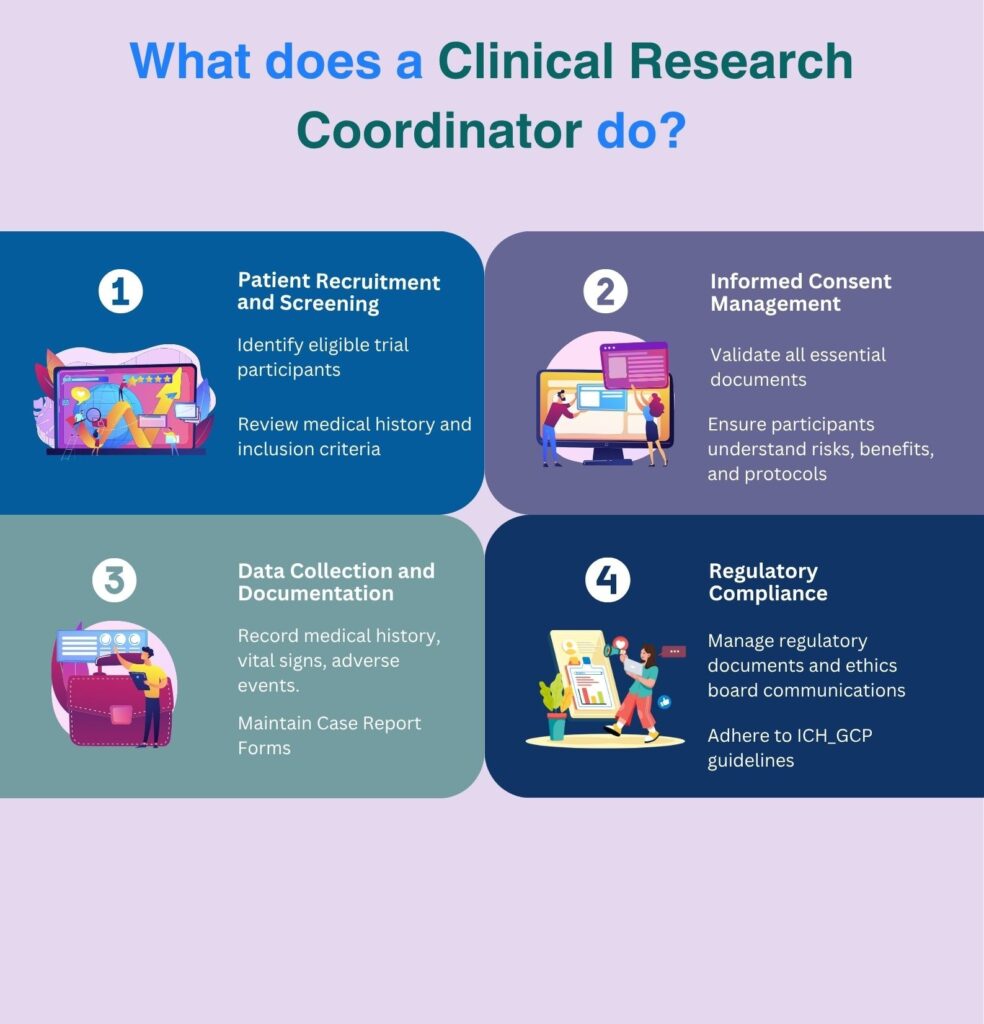
Before diving into training programs, it is crucial to understand what the role looks like on the ground. A Clinical Research Coordinator manages the daily operations of clinical trials at a research site such as a hospital, university medical center, or private clinic. They act as the primary bridge connecting the Principal Investigator (the lead doctor), the institutional review board (IRB), clinical trial sponsors, and the human subjects participating in the study.
Core day-to-day responsibilities typically include:
- Patient Recruitment and Screening: Identifying and evaluating potential candidates to ensure they meet strict trial eligibility criteria.
- Informed Consent Management: Ensuring all participants fully understand the risks, benefits, and protocols of the study before signing up.
- Data Collection & Documentation: Accurately recording medical histories, vital signs, and adverse events, while meticulously maintaining Case Report Forms (CRFs).
- Regulatory Compliance: Safeguarding the trial protocol by strictly adhering to Good Clinical Practice (GCP) guidelines and local regulatory laws (like CDSCO in India or FDA in the USA).
Why Get Certified?
While a university degree teaches you basic science, it doesn’t teach you how to run a real-world clinical trial site. Gaining a clinical research certification proves to top employers that you have the practical skills needed to do the job right from day one.
1. Understanding Global Rules
Clinical trials must follow strict international laws to protect patients. A good certification course teaches you how to easily navigate these rules, whether you are following the US FDA regulations in America or the New Drugs and Clinical Trials Rules (NDCTR) in India. Knowing both markets makes you incredibly valuable to global employers.
2. Reducing Mistakes on the Job
Medical companies look for professionals who can work without making costly mistakes. Certified coordinators know how to avoid errors in medical paperwork, which keeps patients safe and keeps research projects on track.
3. Freedom to Work Internationally
The beauty of medical research is that it uses a universal language. The skills you learn for a site in cities like Mumbai or Bengaluru are exactly the same skills needed in Boston or San Francisco. Getting certified gives you the professional mobility to build a cross-border career.
View Course:- https://prorelixeducation.com/courses-page/clinical-research-coordinator-certification/
Career Entry Requirements & Compensation: India vs. USA
The job requirements and starting salaries vary depending on which country you choose to start your career in:
| What You Need to Know | United States Market Ecosystem | Indian Market Ecosystem |
| Degrees Needed to Apply | Bachelor’s or Master’s in Life Sciences, Registered Nurse (RN) Credentials, International Medical Graduates (IMGs) | B.Pharm, M.Pharm, or PharmD, BSc / MSc in Biotechnology or Nursing, Healthcare Graduates (BAMS / BHMS) |
| First-Job Hiring Barriers | High Gating: Hospital networks and premium university sites rarely hire pure freshers without a completed, hands-on clinical research certification or internship. | Medium Gating: Recruitment teams focus on a mix of your college grades and a practical, post-graduate upskilling certificate. |
| Fresher Starting Salary | $55,000 to $70,000 USD per year, scaling higher in competitive biopharma states like California and Massachusetts. | ₹3,50,000 to ₹6,00,000 INR per year, concentrated in Tier-1 corporate research cities. |
| Salary with Experience | $75,000 to $110,000+ USD per year as you advance into Lead Coordinator, Site Manager, or Regional Auditor roles. | ₹8,00,000 to ₹18,00,000+ INR per year as you move into global trial management and project leadership. |
| Why the Jobs are Growing | Massive venture capital funding for biotech startups, complex oncology pipelines, and a surge in decentralized clinical trials. | The preferred global destination for data management, high patient enrollment diversity, and rapid site activation mechanics. |
Skills You Learn in a High-Quality CRC Training Program
A premium training program doesn’t just make you memorize textbooks, it teaches you the actual software and day-to-day habits used in the industry:
- Using Clinical Software: You will get comfortable using real Electronic Data Capture (EDC) systems to log patient data and solve data flags.
- Patient Safety Management: You will learn how to handle the patient consent process safely and report any medical side effects immediately.
- Handling Investigational Products: You will be trained on how to track, store, and manage experimental drugs safely at the clinic.
- Audit Readiness: You will master how to keep files perfectly organized so that your site passes official government audits at any moment.
Understanding Clinical Research Coordinator Certification Pathways
Building your career is a simple, two-step process:
Phase 1: Foundational Training
First, you take a targeted clinical research coordinator training program to learn the daily workflows, medical words, and core skills required for the job.
Phase 2: Global Credentials
Once you have completed your training or gained initial site experience, you can take international exams to earn prestigious titles that are respected worldwide, such as those from SOCRA (Society of Clinical Research Associates) or ACRP (Association of Clinical Research Professionals). A solid training course acts as your preparation engine to pass these advanced exams smoothly.
Who Should Enroll in a CRC Training Program?
You do not need prior corporate experience to start. This career path is perfect for:
- Life Science & Pharma Graduates: If you hold a degree like B.Pharm, M.Pharm, PharmD, or a BSc/MSc in Biotech, this training bridges the gap between your university theory and a real corporate job.
- Nurses & Healthcare Professionals: If you have a background in nursing or alternative medicine (like BAMS or BHMS), your medical knowledge is highly prized. This course teaches you the business and data side of clinical trials.
- International Medical Graduates (IMGs): If you earned a medical degree abroad and are moving to the US, passing licensing exams can take years. Becoming a certified CRC is a fast, respected way to start working in the US medical sector immediately.
Boost Your Career: The ProRelix Education Advantage
If you want an affordable, practical way to learn these skills, the Clinical Research Coordinator Certification Course by ProRelix Education is an excellent choice.
This program is 100% online and self-paced, making it easy for busy students or working freshers to complete. Because it is designed by ProRelix Research, an active, global Contract Research Organization. You will learn exactly what hiring managers are looking for today.
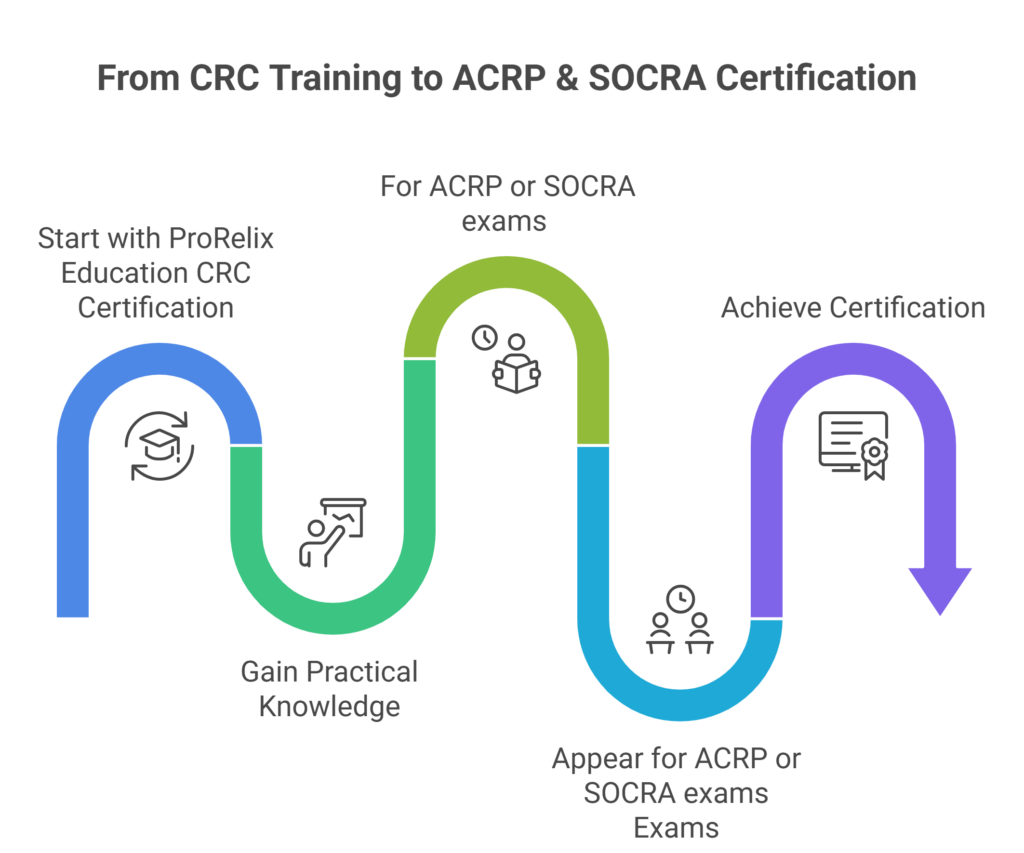
Your Bridge to Advanced Certifications
Taking this upskilling course gives you the exact blueprint needed to prepare for top international credentialing bodies, helping you land global qualifications like:
- CCRPS (Center for Clinical Research Professional Studies): The ProRelix syllabus directly covers the core data workflows and documentation practices needed to clear these modern industry exams.
- CCPRA (Certified Clinical Research Professional Advancement Alliance): You will practice real-world situational case studies, giving you the confidence and judgment required to ace advanced clinical board tests.
Conclusion: Future-Proof Your Career
The clinical trial market is growing faster than ever. With India acting as a massive global hub for data management and the USA leading the world in new medical innovations, certified coordinators are in high demand across both countries. Investing in a Certified Clinical Research Coordinator Program is the smartest way to turn your life science degree into an exciting, well-paying, and globally mobile corporate career.
FAQs
Programs like the ProRelix Education CRC course are 100% online and self-paced, allowing fresh graduates or working professionals to complete the training comfortably at their own speed.
You will master international ICH-GCP guidelines, alongside country-specific laws such as the US FDA regulations for America and the New Drugs and Clinical Trials Rules (NDCTR) for India.
Yes, it is highly valued because it is directly backed by ProRelix Research, an active, global Contract Research Organization (CRO) that designs its training to meet current hiring needs in both the US and Indian markets.
It serves as a fast, highly respected career entry pathway into the US biotech ecosystem, allowing IMGs to utilize their medical knowledge while bypassing lengthy residency licensing timelines.
No, a high-quality clinical research training program is built for beginners and teaches you how to navigate standard Electronic Data Capture (EDC) systems without needing prior tech experience.